

Surprisingly, this wild native is rather a new plant to me, and not one that I remember from childhood.
When I lived in town in my early adult years, there was a patch thriving down the street that I would see often on walks. Once I learned it was Echinacea (aka “Purple Coneflower”), I also learned this plant was a popular cold tea that was readily available commercially.
What I didn’t know (or understand) was why it wasn’t thriving as a readily reseeding native like it should have been. I never got around to establishing it in my yard in town, but knew it was a must have at the farm.
It took a lot of attempts, but we’ve managed to bring back in one small space. Now that I have a three year old patch thriving, I’ve decided this would be an excellent time to try harvesting it.
While the entire plant - roots and all - can be used, I decided to just cut a few stalks. For now, I’d like to leave the roots alone while the patch is still getting established. I’d also like to make sure it gets established in other areas, not just in a tiny garden bed.
Echinacea can also be made into a tincture, but this is not a skill I’ve yet mastered. I am, however, a big fan of drying herbs for teas. Since I have a nifty drying rack, I’ve left just stalks with leaves and flowers to dry. In a few days, I’ll trim them down and put them in a jar, then try it in a tea.
This herb is one that is said to have been used by Native Americans for pain, respiratory infections, and a variety of ailments. Of course our modern society has failed to properly research or approve of any medical uses for this wildflower. However, the list of uses by various tribes and native societies has proved this plant’s importance in my book. (There’s an interesting PDF by USDA about native uses that you can find here.)
Grown next to Black Eyed Susans, Echinacea offers a colorful contrast and pollinator buffet. When harvesting, I made sure to only take a few stalks and leave more than enough for beneficial bugs.
I am grateful to finally have the chance to grow and harvest a beneficial beauty such as this lovely native.
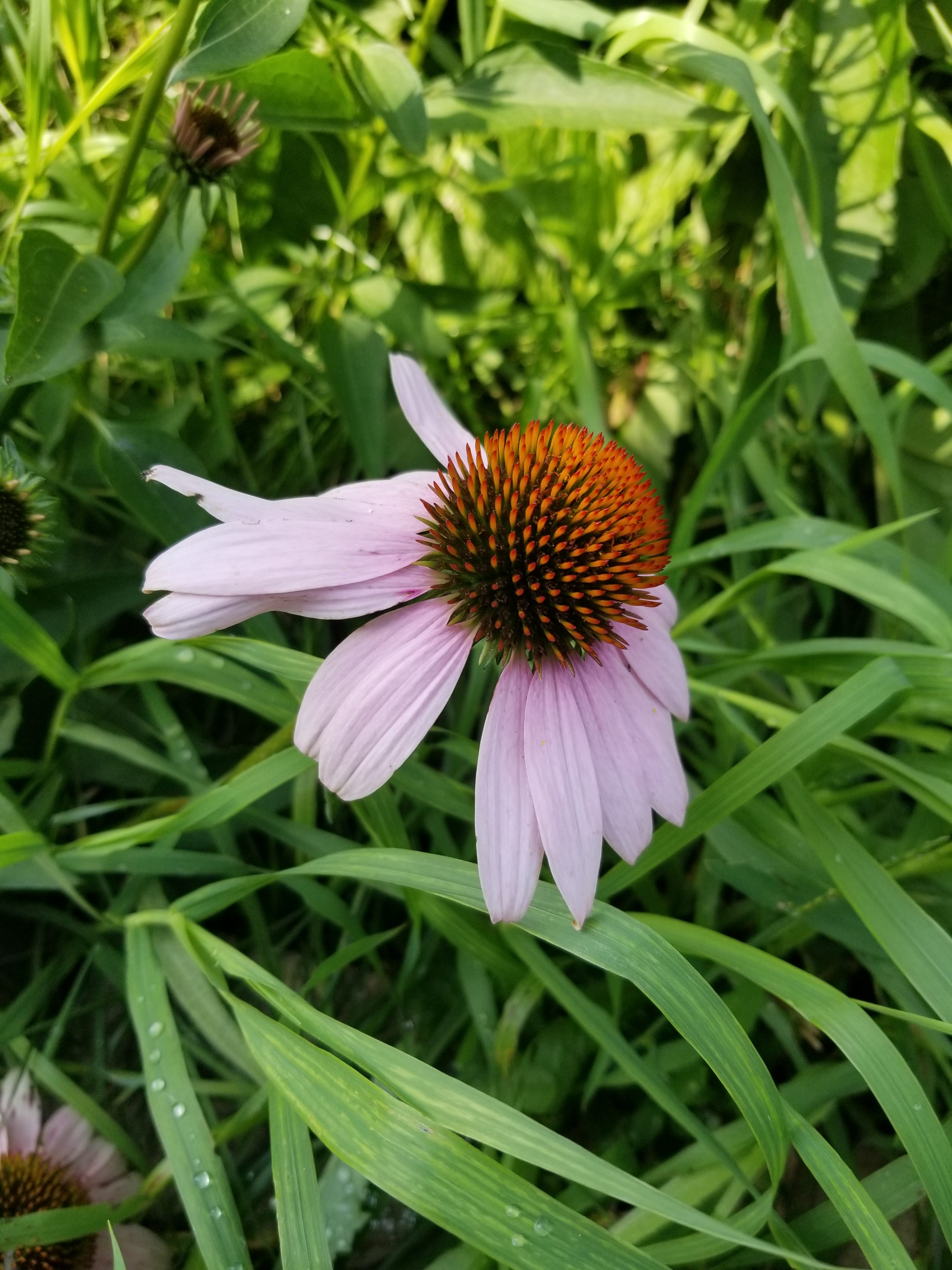
One of the dozens of Echinacea flowers in the small single patch.