
Flood Warnings
When Nature uses elements as a weapon.

When a major natural disaster happens, it rarely affects more than a fraction of the population of any given area. To those communities, though, they are catastrophic, leaving scars for years. Business halts, people’s lives become more about survival than normalcy. Folks in the area remember for decades, while the rest of the country forgets.
Clean-up happens behind the scenes, once the media has its fill of shocking coverage. A stray article shows up weeks or months later, telling us progress is slow, they’re still hurting, and everyone forgot. Maybe they return to a sense of normalcy, maybe daily survival in uncertain conditions becomes the norm. Everyone moves on to the next newsreel.
Year after year disasters happen, featuring floods, earthquakes, tornadoes, fires, and the occasional volcano. We’re shocked, we help a little, we move on. One by one, our lives become a little more difficult, and we can’t figure out why.
Have you ever thought about what happens when these events become so widespread, it can’t be forgotten or ignored? When the body count becomes so high, it surpasses other memorable horrendous events in history? When so many businesses are affected, it ripples to the unaffected communities in a noticeable way? I daydream possible outcomes quite often. Too much, you could say. But I see it coming.
I know we don’t like to talk about disaster preparation, or how we’ve caused many of these disasters with our disregard of Nature. Building and pouring concrete where we shouldn’t, sacrificing natural habitat for human infrastructure, and forcefully changing the landscape for vanity or profit. All these very human things, like it or not, have altered the climate and the way weather behaves.
As uncomfortable as it is, these conversations need to happen. We need to be listening to the Land, the Sky, and even people who are trying to educate us on Nature. She hasn’t been pleased with the blatant ignorance and justification of destruction. Perhaps it’s time to be aware.
It’s necessary to recognize the hazards of the Land and make proper preparations, despite how infrequently you’ll use them. Pay attention to your local weather forecasts, despite how wrong they can be sometimes. Check daily, as it changes often.
More importantly, though, be aware of your natural surroundings - the sky, animal patterns, wind, or any other indicator the weather is changing fast. Just the other day I caught funnel clouds forming, the thunder my only warning a tornado was possible that day. Thankfully it didn’t touch down, but the warnings on my phone didn’t go off until the ominous clouds had slipped to the west.
Simply paying attention can help cut down the amount of avoidable accidents, such as setting fires on red flag days, trying to drive into flood waters, or attending events when severe weather is predicted. Earthquakes around an active volcano? Maybe don’t go hiking that day! Clouds looking dark? Go inside, just to be on the safe side, or at least get ready to run. And no matter what, don’t ignore that siren or alert. Be lucky you got the warning!
We can survive the impending natural disasters, but we need to listen. Not only to each other, but Nature especially. She is fighting back against the changes made to Her Land without permission, and rightfully so. All we can do is heed the warnings, trying our best to live with Nature instead of against it, like so many humans do.
Ready or not, the floods are coming.
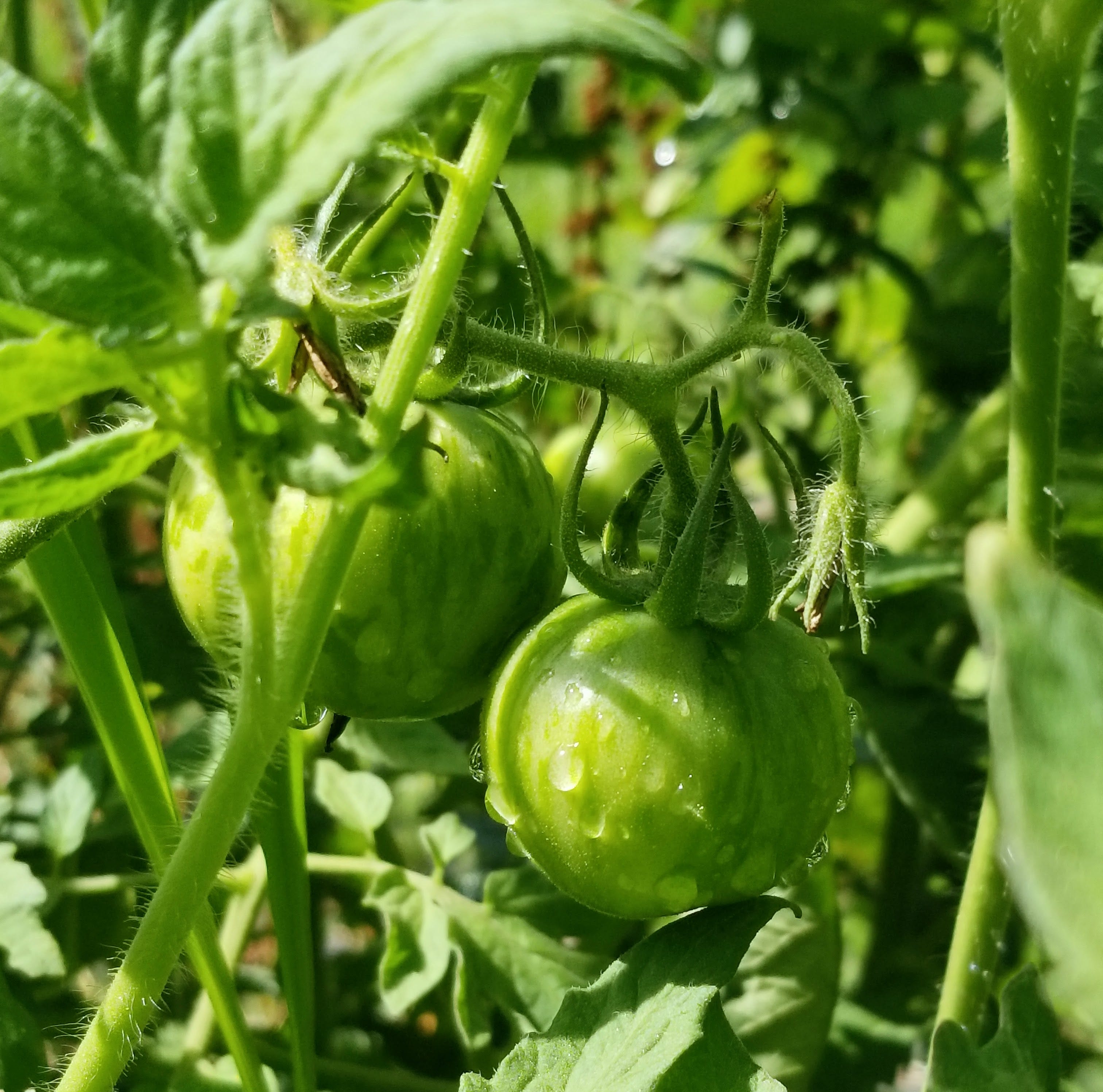
Red Zebra tomatoes a few hours after an early morning rain shower, just as the sun began to come up from behind the clouds moving off to the east. We’ve had a great deal of rain lately, well above average. Being at a higher elevation, the majority of the garden and its ecosystem are absolutely thriving. Nature always knows best.