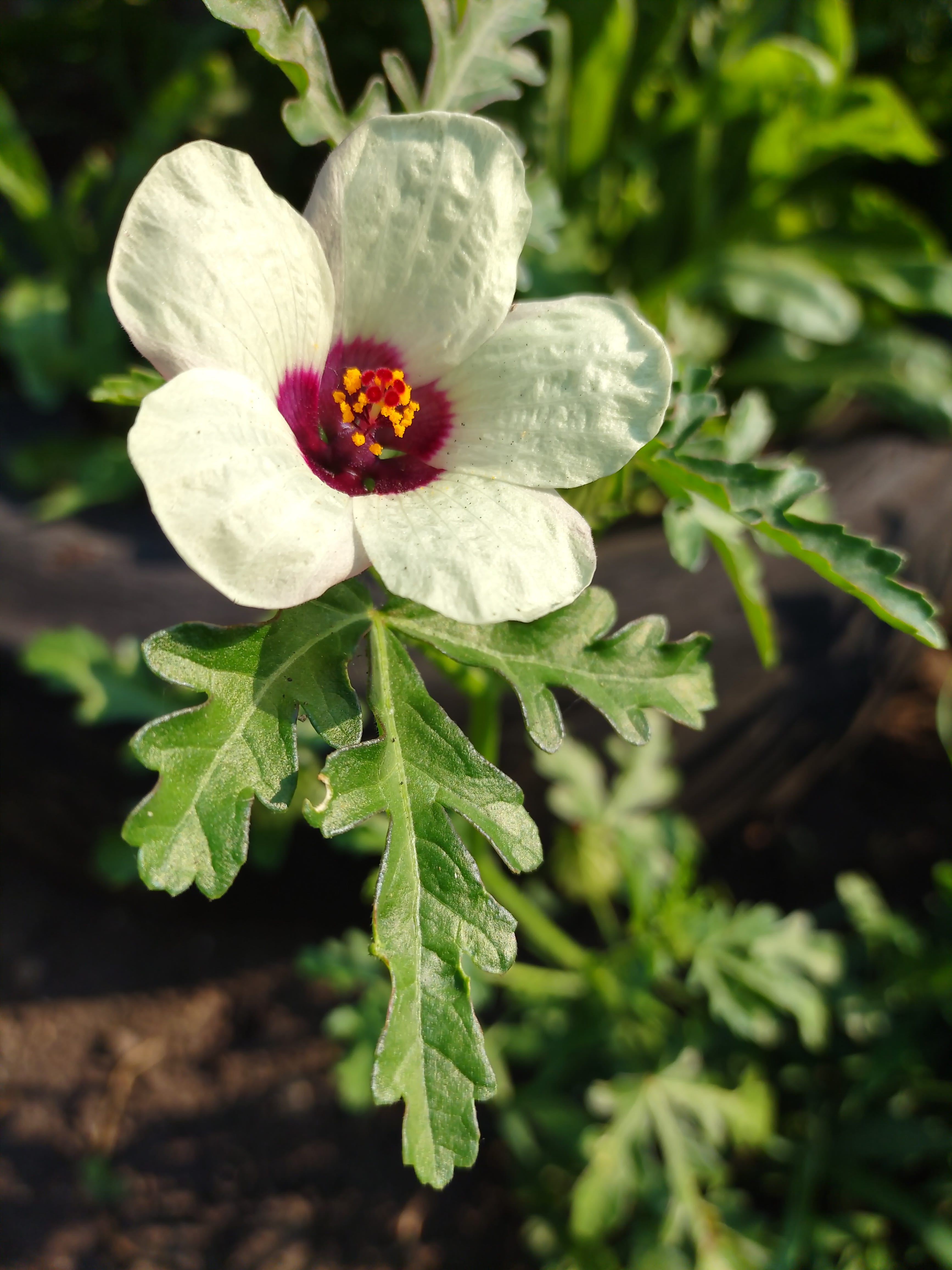
One of my favorite ‘weeds’ to catch blooming is the Hibiscus trionum, or Flower of an Hour.
It’s called this because the bloom is only visible for a short time in the morning. I believe it’s a bit longer than just an hour, maybe up to three, but still a short window. I absolutely love to point it out when I see it blooming, then tell it’s story.
I first discovered this ‘weed’ when I lived in town. I was obsessed with removing yard grass, which allowed space for windblown seeds to move in. It then became a game of ‘what is this, where did it come from, and is it edible?’
This flower, hibiscus trionum, is indeed a hibiscus plant. It’s edible, yes, but not a native. It is also not the commercialized herbal tea version Hibiscus sabdariffa. The difference? Unclear, as we don’t often study non-commercially grown plants. But like it’s hibiscus cousin, it does appear to have antioxidant properties.
This wildflower version was also once considered a noxious weed, but according to Minnesota, commercial row crops took care of that. It wasn’t eradicated, it just isn’t a threat to commercial crops anymore.
In yards like mine, these flowers manage to thrive when given space a proper area to do so. They will readily reseed, yes. When I lived in town, I saved seeds. Those seeds were planted in a few places around the farm a few years ago. They’ve managed to keep reseeding themselves because I let them. I’ve also spotted them in the area outside my farm, so I know they’re steadily growing still.
Should we be concerned a non-native is growing in wild places? Sometimes, but not with hibiscus. It’s not an aggressive grower, and does not push out natives. It doesn’t compete with other crops. It’s root system is shallow, it’s plant small. It does no harm and offers another opportunity for pollinators. It has medicinal properties and is toxic to no one.
If you see it, let it grow. And catch it blooming if you can.