

Mint has one of my favorite origin stories…
According to Greek and Roman mythology, Minthe was the mistress of Hades, ruler of the underworld. His wife, Persephone (or her mother, Demeter, Goddess of Agriculture) turned Minthe into the weedy plant we see today.
This little story is a side bar in a bigger tale involving the Greek underworld and the Gods/Goddesses, but it’s fun nonetheless.
Mint comes in a lot of forms, some cultivated for commercial use, some seen as an invasive weed. Almost all of them are not native to North America, yet most are also edible herbs.
Ground Ivy (also called Creeping Charlie) is usually at the top of ‘invasive’ list for most gardeners, despite our ancestors bringing this herb over from the old world because of its culinary and herbal uses. It’s one of my go-to plants for a homebrew herbal tea because it’s so high in vitamin C and other nutrients.
Also thrown into my tea brews - spearmint. No, I don’t grow peppermint, despite it being ‘better’ in the nutrient and flavor department. I find it’s pickier to grow, and it’s actually a hybrid plant and not a native anywhere. I’m also not a fan of the flavor, preferring my spearmint. Chocolate mint, however, is a suitable substitution (or addition).
Lemon balm is actually in the mint family as well, with it’s own unique set of benefits and flavor.
Other lesser known mint plants include stinging nettles, motherwort, and catnip. Yes, all of these are mint!
While the health benefits and chemical composition may vary slightly between all the varieties, all of these are considered immune boosters and generally healthy for our system.
Here’s a quick guide for general use of these basic mints:
Spearmint, peppermint, ground ivy, and lemon balm are great for colds, and for settling upset stomachs.
Catnip and motherwort are beneficial for woman’s health.
Stinging nettle is high in iron, and the roots are good for prostate health.
As with all wild herbs, it’s important to take caution with where you’re picking from. If it’s in your own garden, great! Just be sure you haven’t used any chemicals, as several of these herbs are known to draw toxins and heavy metals from the ground (such as stinging nettle - be extremely careful harvesting this one, not just because of it’s sting!)
There are many, many more wild plants in the mint family. Take care that you research them all carefully, as not all are edible (or safe for long term use).
Don’t forget to thank Persephone for the prolific, beneficial herb while you’re harvesting!
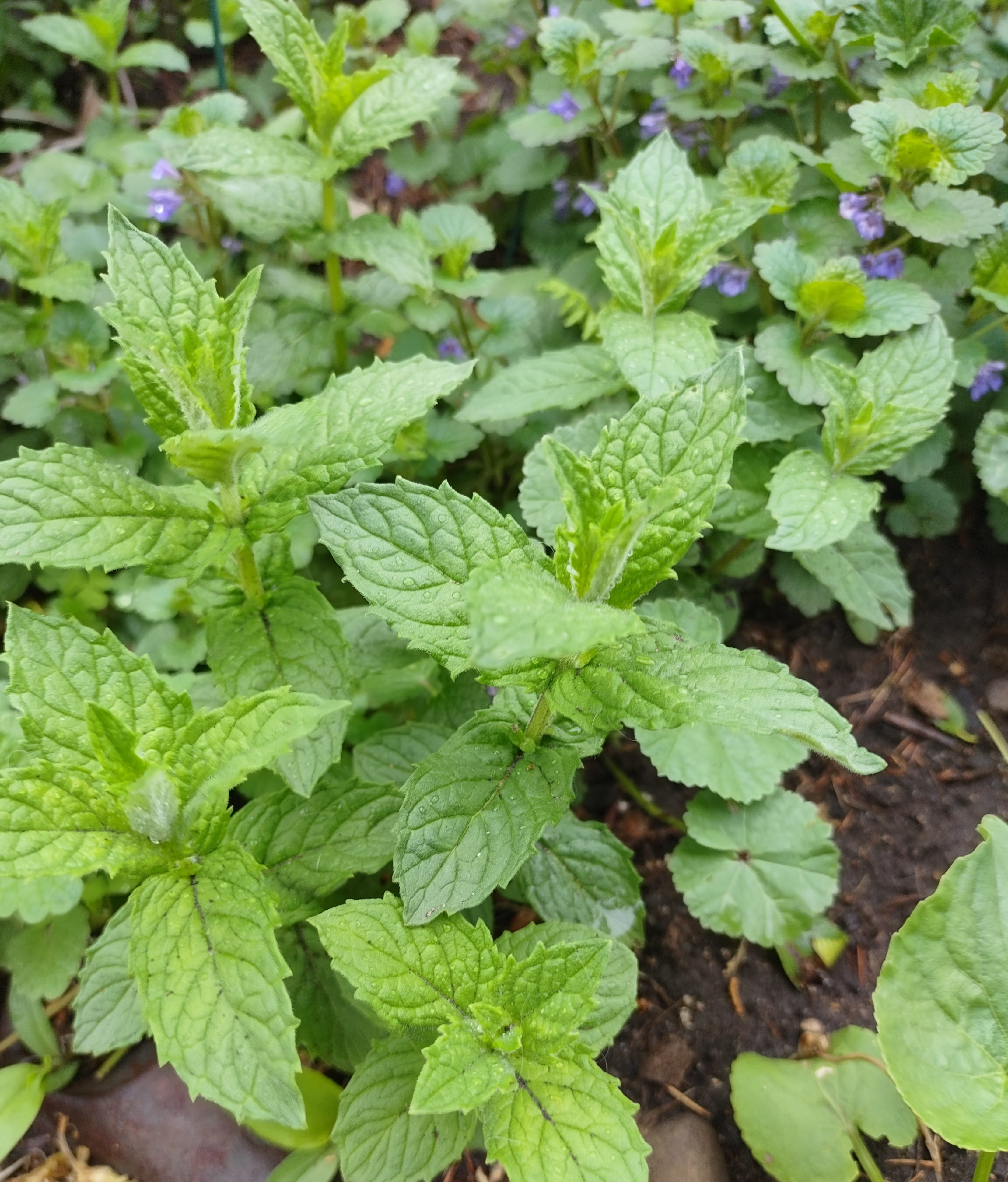
Picture of spearmint in my garden bed, with ground ivy growing in the background. Mallow, violets, and catnip also grow in this patch.